Recognizing Colorectal Cancer Awareness Month: Closing the Screening Gap
Recognizing Colorectal Cancer Awareness Month: Closing the Screening Gap
March is Colorectal Cancer Awareness Month, and with colorectal cancer rates continuing to rise, understanding your personal risk and knowing when to get screened is more important than ever. According to a recent report from the American Cancer Society, more than 150,000 new cases of colorectal cancer will be diagnosed in the United States in 2026. And among adults under 50, colorectal cancer is now the number one cause of cancer-related death. The research also found that half of all people diagnosed before age 50 are between ages 45 and 49 – meaning that despite being eligible for screening, adherence is just 37%.
These statistics underscore a larger problem in our healthcare system: people aren’t getting screened. The negative implications of delayed cancer screenings are significant. When done proactively, screening can prevent late-stage diagnoses, which lead to higher mortality rates.
You may be wondering why this is the case.
For traditional screenings, access is a major barrier. Currently, more than 60 million people live in rural communities across the country, with over 80% of that population being designated as medically underserved. Now, screening for colorectal cancer is easier than ever and can be completed from the comfort of your own home. Even still, many eligible Americans still are not up to date on recommended screening. The reason being that patients can be confused about how to use the kits, forget to complete them, or lack the encouragement and support needed to follow through. This is where Sprinter Health helps close the gap.
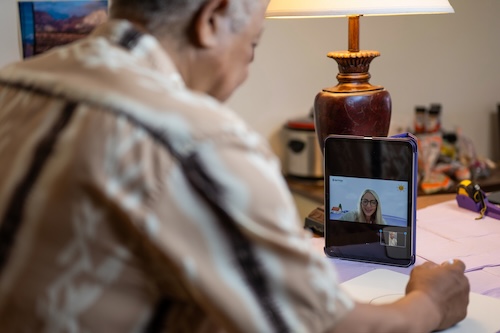
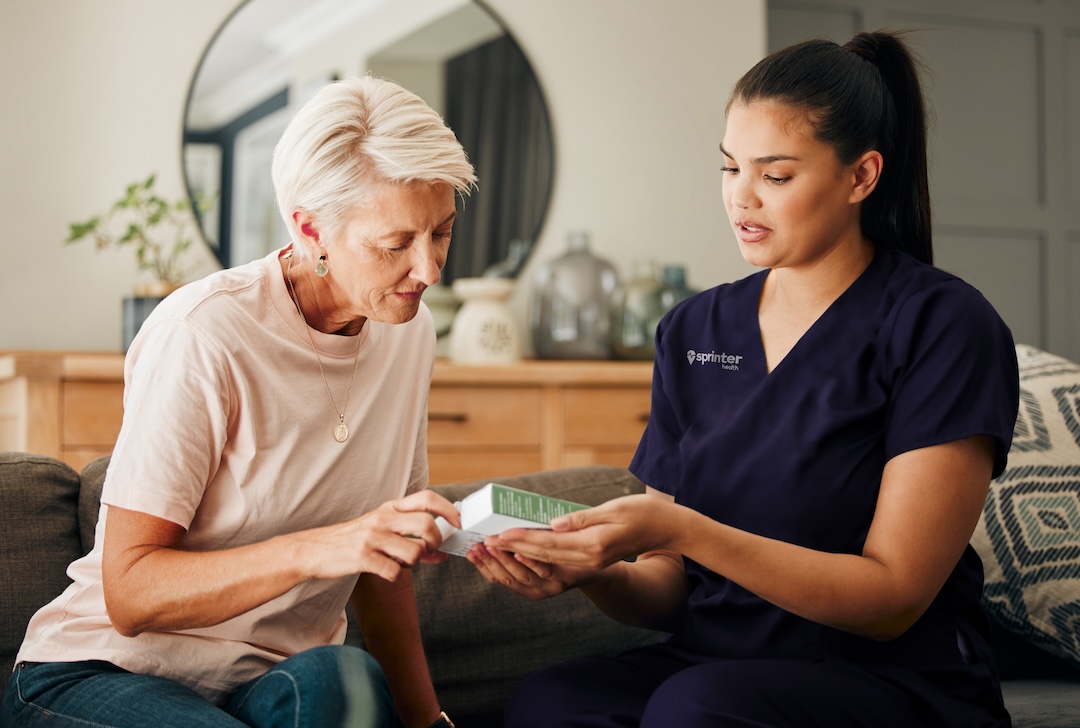
At Sprinter Health, we are dedicated to bringing quality care to the hardest-to-reach patients who have long been ignored or left behind by traditional models of care. Through our hybrid care model, which combines in-person visits with virtual care, our Sprinters provide the “last-mile” support that helps patients get over the finish line and complete their in-home screenings.
This support can take many forms: providing education about how the test works, reinforcing the importance of proactive screening, or simply walking patients through the process step by step. By meeting patients where they are, we help remove barriers that might otherwise have prevented them from completing critical screenings. While Sprinter’s in-home care delivery model used to compete with traditional at-home kits, they now complement them in a way that educates patients and enforces the critical nature of early detection.
Sprinter Health’s kit return rate is 40% with our approach of in-person education and follow up compared to an estimated 5-10% return rate with traditional mailing approaches. As colorectal cancer rates continue to rise, improving screening adherence must remain a priority for healthcare organizations across the board. By combining technology, in-person care, and a focus on access, Sprinter Health is working to close these gaps and ensure that patients receive the preventive care they need, when and where they need it most.






.png)